
Moniteau County Civil Docket Searches
Missouri Case.net is where a Moniteau County civil docket search starts. Got a case number from a summons or clerk notice? Use Case Number Search. When no number is handy, Litigant Name Search works instead. Set the location filter to Moniteau County or the 26th Judicial Circuit. Then check the style, filing date, and case type against what you know before opening a match. Filing Date Search helps when you know roughly when a case began.
Case.net shows public case information only. The Moniteau County Circuit Clerk holds the actual docket and case file. The counter, the courthouse public terminal, a phone call, or a narrow Sunshine Law request all remain good options when an image is missing or you need a copy. Visit the clerk at 200 E. Main St., Room 102, California, Missouri 65018. Or call (573) 796-2071.
- Choose Case Number Search when the exact Moniteau civil number is available.
- Otherwise use a party name and refine the court location and first name as needed.
- Open the result and read Case Header, Parties & Attorneys, Docket Entries, and Scheduled Hearings & Trials.
- Compare filings and orders by date, then review the Civil Judgments area when a judgment question is involved.
- Give the clerk the case number and exact pleading, order, judgment, or date range when requesting a public copy.
Moniteau Circuit and Associate Civil
Missouri runs a single trial-court level, the Circuit Court. It is divided into divisions rather than separate county civil courts. Civil matters in Moniteau County flow through the Missouri Circuit Court, 26th Judicial Circuit, and the county Circuit Clerk. Circuit civil cases and associate civil or small-claims matters use the same courthouse and clerk route. The court assignment and case type in the record control where a given case belongs. There is no separate Moniteau civil courthouse or district clerk to track down.
Keep family, probate, and juvenile matters distinct from ordinary civil cases. They may share the courthouse and clerk. But their case types, divisions, and security levels differ. A probate case number often carries PR or P. A domestic-relations number often carries DR. Treat those patterns as clues, not guarantees for every older file.
For the bench itself, RSMo §478.705 names the judges and divisions of the 26th Judicial Circuit.
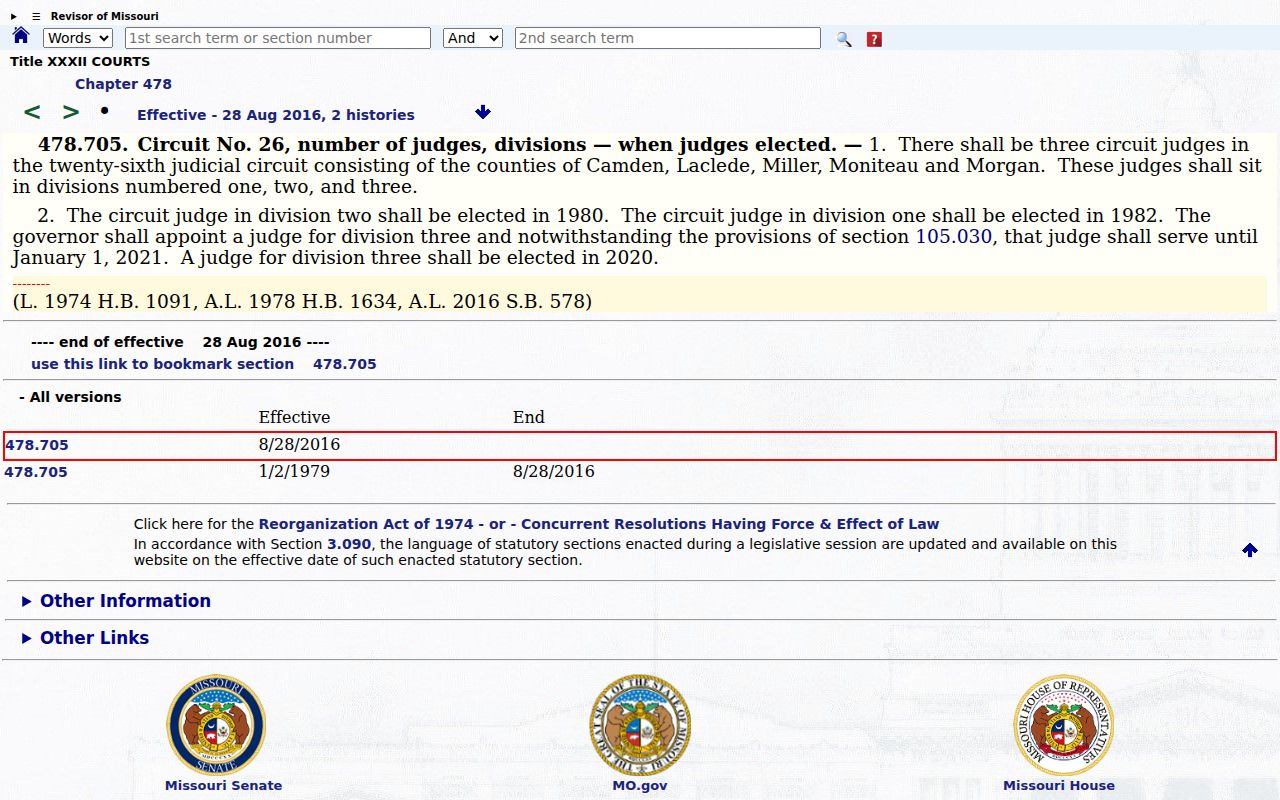
This structure matters when you read a Moniteau civil docket. The court and division fields tell you more than any generic county-court label, because the Circuit framework is what actually assigns the case.
Civil Dockets: What They Show
A civil docket tracks a case from the first filing through enforcement or appeal. The public header lists the case number, filing date, court or division, judge, case type, style, and status. The Docket Entries then follow in order. Petitions, answers, service events, motions, orders, notices, hearings, judgments, and post-judgment activity all appear there. A linked entry may carry an attached document. Remote access still depends on the court's security rules, though.
| Case number | A civil pattern may read YYMT-CV#####. Domestic and probate patterns can use DR, PR, or P; preserve the number supplied by the court. |
|---|---|
| Parties and counsel | Public party roles such as plaintiff, defendant, petitioner, respondent, or intervenor, plus attorney information where public. |
| Service | Summons or citation issued, return, waiver, publication, or a failed-service entry. Issued does not mean served. |
| Filings and rulings | Petition, answer, motion, order, notice, hearing, and judgment entries in chronological order. |
| Judgment record | Judgment date, court, amount where entered, satisfaction or vacatur date, and related execution or garnishment fields. |
A caption names a case. It decides nothing. In the same way, a docketed answer is not a ruling on the merits, so read any signed order or judgment alongside its surrounding entries before describing what the court actually did.
Moniteau Civil Motions and Orders
The most useful habit in a Moniteau civil docket is telling a request from a ruling. A motion asks the judge to act. A proposed order may ride along with it. Nothing becomes the court's decision until an order or judgment is entered. Watch for the pattern: a motion filed one date, argument set on another, and a signed order later still. Each entry means something different in the case history.
Service works the same way. A summons or citation issued entry just shows that process went out. The proof comes next: a return, a waiver, publication, or a similar service entry. Service alone does not establish default judgment. Only the case record and the court's own action show whether default was entered.
- Notice of setting
- Notice that a matter has been placed on a future court calendar.
- DWOP
- Dismissed for want of prosecution, a civil dismissal for failure to move the case forward.
- Nonsuit
- A plaintiff's ending of a civil claim without a merits judgment.
- Satisfaction
- An entry showing a judgment record was marked satisfied, not a new lawsuit.
What Cases Fill the Civil Docket
The court's case type and style define what fills the Moniteau County civil docket. Civil petitions can raise contract, debt, property, injury, quiet-title, or other civil claims. Associate civil and small-claims routes handle matters within associate jurisdiction. Domestic relations and probate show up in the same statewide system, but read them under their own division and access rules.
- Circuit-civil matters, including contract, property, tort, and other civil claims.
- Associate civil and small-claims matters, identified by the court's assigned case type.
- Domestic-relations cases, which may use a DR designation and division-specific security treatment.
- Probate matters, often styled “In the Estate of” and identified by PR or P patterns.
- Post-judgment matters such as execution, garnishment, satisfaction, set-aside motions, and appeals.
Start from case type, every time. Whether a city agency, a private party, or a county entity is named in the caption, the docket still lives in the same court record.
Moniteau Civil Judgment Entries
A disposition can take many forms. It may be a judgment, agreed judgment, default judgment, dismissal, voluntary dismissal, nonsuit, DWOP, summary judgment, transfer, consolidation, appeal, or satisfaction. Each word carries a different effect. A dismissal is not a judgment. A satisfaction notes action on a judgment that already exists. A transfer or appeal may open a related-case reference. Yet the earlier docket history stays right where it was.
Missouri indexes judgments by the party the judgment ran against. Case number, date of judgment, and court round out the entry. The index can also list the judgment amount, any satisfaction or vacatur date, and a summary. Open the case itself and read the Civil Judgments with the chronological entries. Do not trust a snippet. The signed judgment supplies the controlling language, always.
Hearings on the Civil Docket
Civil cases in Moniteau County take many shapes on the hearing calendar. A docket sheet may list a notice of setting, a status conference, a law day, a motion hearing, mediation, or trial. The Scheduled Hearings & Trials Search helps too. It filters by location, date, and judge or commissioner, over either a Single Day or Seven Day period. For the most current setting, though, the individual case usually wins. Its docket records later resets and continuances the calendar never catches.
Never read a calendar entry as a result. It is not a judgment, and it gives no promise the date will hold. Check it against later docket entries, a signed order, or the official notice before relying on it. Anything unclear? Call the Circuit Clerk with the full case number. Ask which division or court office holds the current setting. For the location, trust the record's courtroom field rather than the courthouse mailing address.
Note: An old civil hearing can still sit in the history after a continuance or reset. So always confirm the newest future date.
Moniteau Civil Document Route
For a Moniteau County civil document, start with the tools, then work outward. Case.net carries the public case index and docket. A document may not be available remotely. The courthouse public terminal then serves as the electronic fallback. The Circuit Clerk handles in-person requests, telephone questions, and narrow written Sunshine Law requests. Want a transcript? That route runs through a court reporter, not the docket system. The Recorder of Deeds function sits apart from the civil docket. The same elected official holds both posts.
A strong request gets specific. Name the case number, the case style, and the filing or docket-entry date. Add the document title. Say whether you need an ordinary or certified copy. Ask for the particular petition, order, or judgment instead of the whole file. The clerk can then tell you whether the public image is open, sealed, redacted, archived, or terminal-only. The clerk can quote any court-specific charge.
Who Can See Civil Dockets
Missouri sets its rules for public access through Court Operating Rule 2. The rule presumes that judicial records can be inspected and copied during regular court hours. Statutes, court rules, and orders can still make a record confidential. Case.net access has limits too. Protected addresses and personal identifiers can hold back a filed image. So can sealed materials and case-specific security restrictions.
Access path: Use Case.net for a public index and docket. For a missing public image, ask the Moniteau County Circuit Clerk about the courthouse terminal or an ordinary copy. A certified copy comes from the clerk, not from a browser printout. A narrow written request should identify the exact public record and ask for a cost estimate.
Family and juvenile matters sometimes carry a higher security level, even in the same courthouse. A restriction does not mean the record is missing. Ask which public portion, if any, you can see, and respect the rule or order cited. Missouri's Sunshine Law policy statement appears at RSMo §610.011.
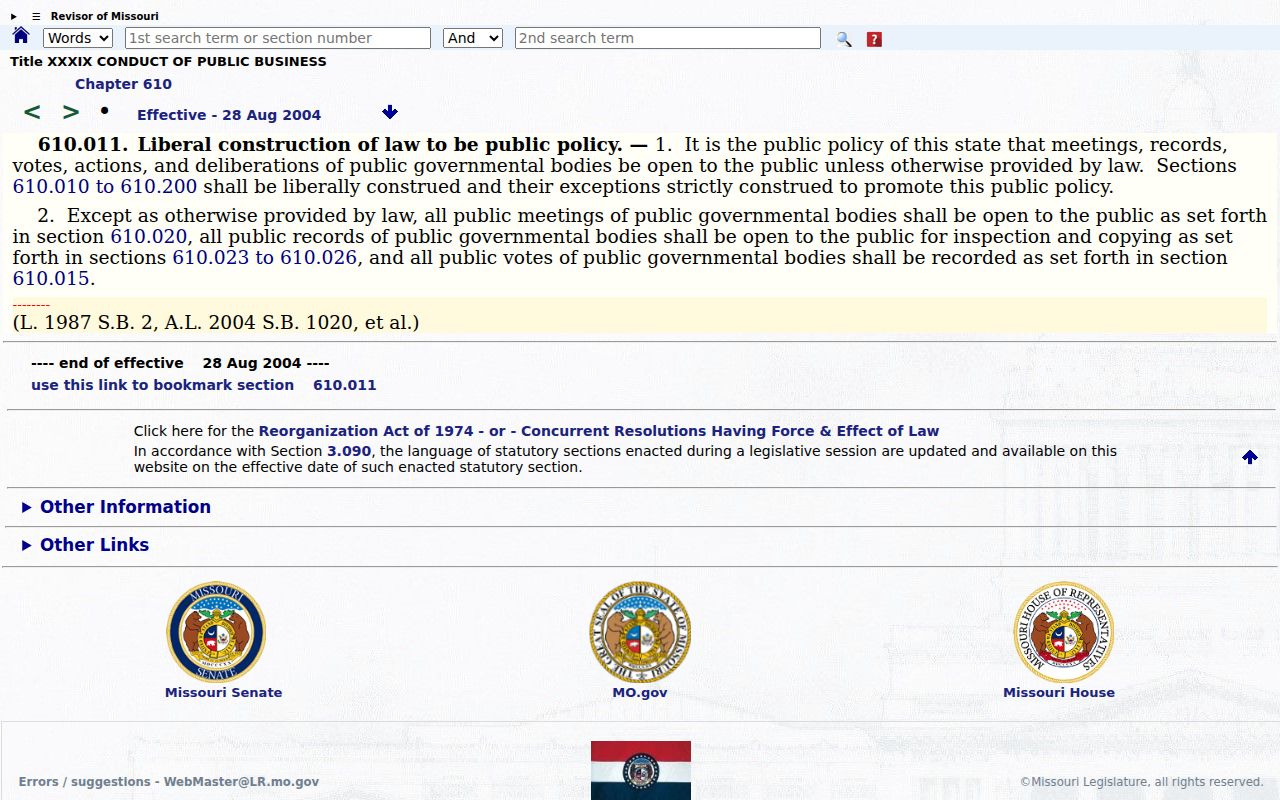
The Sunshine Law presumes openness. That presumption works beside the separate judicial rules and confidentiality limits that govern particular court records.
Moniteau Civil Copy Costs
Searching the public docket on Case.net costs nothing. Moniteau County publishes no civil-copy fee, electronic-image price, certified-copy quote, fax route, or local turnaround promise. So ask first. The Circuit Clerk can give a current cost before any copy request is processed, and a statewide filing fee should never be mistaken for a Moniteau copy price.
| Item | What the research supports |
|---|---|
| Case.net public search | Free public index and docket search. |
| Plain paper public-record copy | RSMo §610.026 sets a ceiling of no more than $0.10 per page for paper copies no larger than 9 by 14 inches, plus permitted actual clerical or research cost. |
| Certified or court-specific copy | Confirm the current amount and availability with the Circuit Clerk; no Moniteau schedule was located. |
Image source: RSMo §610.026 public-record copying and cost-estimate provisions.
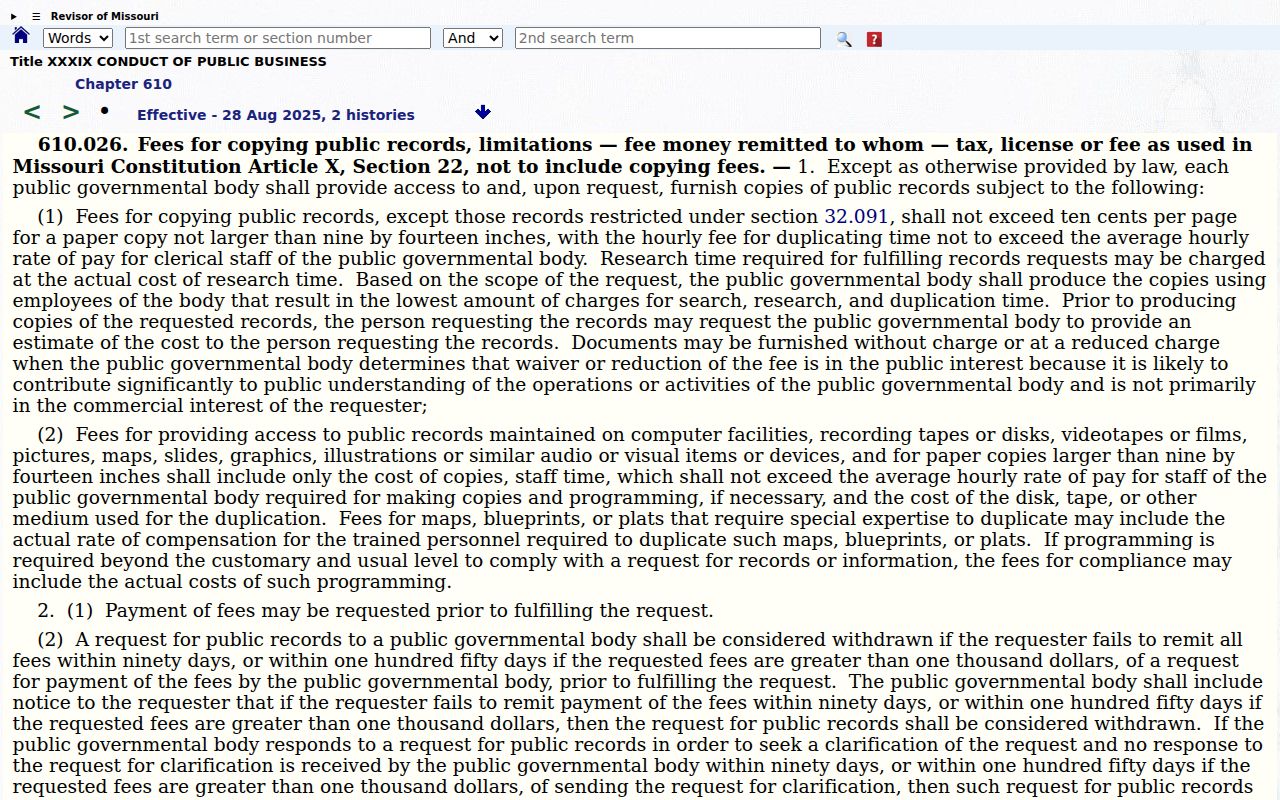
The statute builds the public-record framework. For a current civil court copy or certification quote, the clerk remains the source.